

Company Introduction
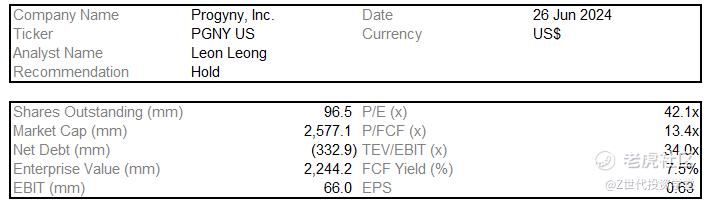
Progyny or ("the Company") is a fertility benefits management company which operates in the United States. The Company launched its fertility benefits solution in 2016 with its first five employer clients, and has since grown its current base of clients to over 460 employer clients, providing fertility benefits solutions to almost 6.4 million lives as of March 31, 2024.
On 24 June 2024, the Company announced the acquisition of Apryl Fertility Benefits, a leading UK-based fertility benefits management provider that provides fertility benefits solutions to clients from over 100 countries globally. Due to a lack of disclosure of the transaction currently, the analysis of Progyny's business will be based solely on its United States business for now.
What are these fertility benefits solutions provided by Progyny?
An overview of Progyny's business model:
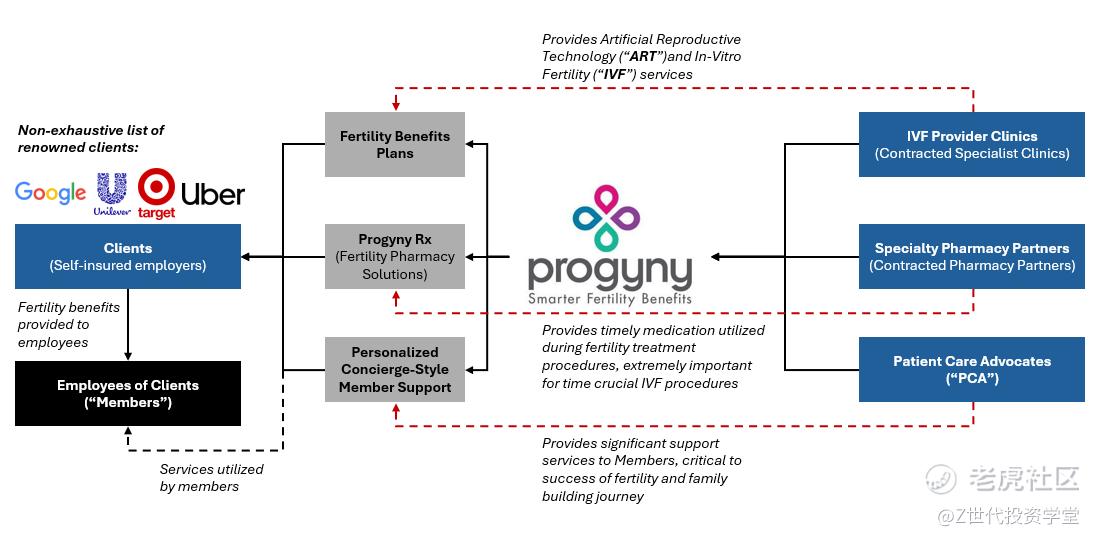
Progyny primarily provides:
-
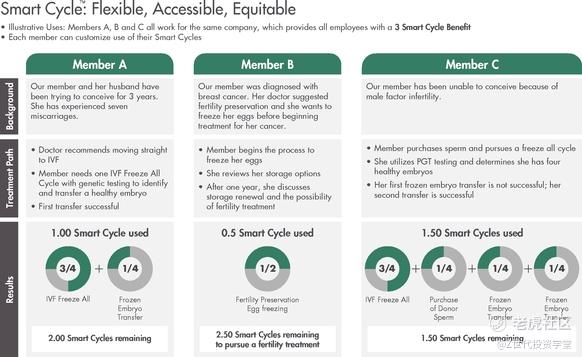
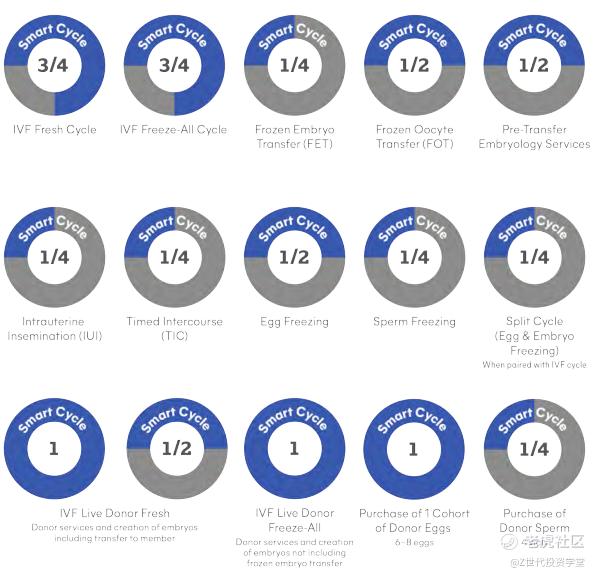
Fertility Benefits Plans: Provides a unique approach to fertility benefits plans, utilizing Smart Cycles which ensures that all Members have comprehensive and equitable fertility coverage. Smart Cycles are proprietary treatment bundles designed by Progyny to include medical services required for a Member's full course of fertility treatment, including all necessary diagnostic testing and access to latest technology for whichever treatment type they wish to pursue. Most Clients opt for 3 lifetime Smart Cycles for each of their employees in their contract with Progyny. An illustration for use cases of Smart Cycles is shown below:
-
Progyny Rx (Its fertility pharmacy solutions): Integrated pharmacy benefits solutions which can be added on by Clients. Enables Members access to medications needed during their fertility treatment. This is crucial as it creates an efficient pharmacy solution for Members and their provider clinics by reducing dispensing and delivery times to Members, eliminating risk of missed treatment cycles and mitigating their administrative burden, which are vital for success rates of IVF treatments given its time sensitive nature
-
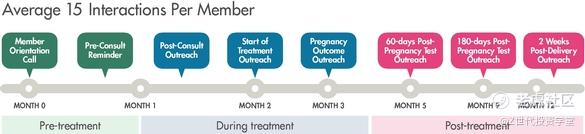
Member support services: Progyny offers a network of high quality Patient Care Advocates ("PCA"), who have necessary fertility expertise and provides end-to-end concierge support for Members, including logistical support, clinical guidance and emotional support for first-time fertility patients, all the way from pre-treatment to post-treatment
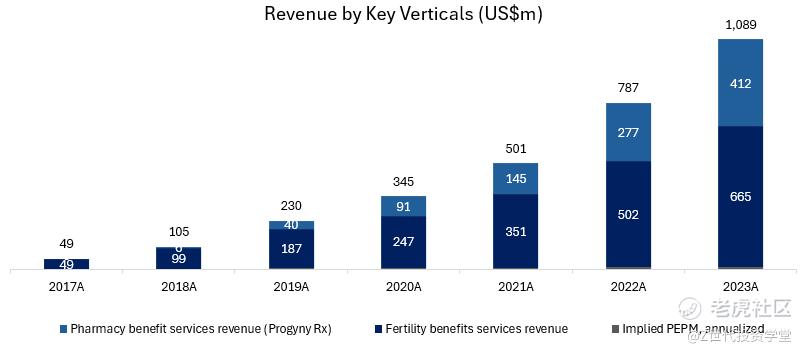
Progyny generates revenue through three main verticals:
-
Fertility benefits services revenue: Driven by utilization of Smart Cycles by Members as they choose their treatment types, paid out by Clients
-
Pharmacy benefits services revenue (Progyny Rx): Driven by Members undergoing IVF treatments via Smart Cycles that require the use of medicine (such as hormononal regulation), likewise paid out by Clients
-
Per Employee Per Month Fee ("PEPM"): Fixed % per employee life covered by a Client, paid out monthly by Clients and is used to compensate Progyny's network of PCAs and running essential data services used in daily operations
Industry Overview:
What is ART and IVF?
Artifical Reproductive Technology ("ART") is the broader umbrella term which includes all fertility treatments in which either eggs or embryos are handled
In-vitro fertilisation ("IVF") is a subset of ART which refers to a surgical procedure where eggs are surgically retrieved from a woman, and then combined with sperm in a laboratory setting to create embryoes, which are then either frozen to store them, donated to another woman, or surgically inserted back into the woman's uterus for a chance of pregnancy.

Genetic testing, or Preinplantation Genetic Testing ("PGT") is usually conducted before any procedures to identify sperm or eggs that are most likely to lead to a healthy baby.
Artificial insemination is conducted on patients with mild fertility issues, where sperm is surgically inserted directly into a woman's uterus for a higher pregnancy rate.
Freezing of eggs enables a woman to preserve the condition of the egg when it is retrieved and buys a woman time in situations where she is still undecided on a future partner, which can be thawed and then combined with sperm of her future spouse at a late stage.
Freezing of embryos is usually done when more than one embryo is created in the IVF process, where the fertility specialist will conduct genetic testing to identify the healthiest embryo to be inserted into a woman's uterus, with the remaining frozen which can be used in case the woman does not get pregnant in the first attempt.
Understanding the state of infertility recognition in the United States
Prevalence of infertility in the United States is high, affecting 1 in 8 couples according to the Centers for Disease Control and Prevention ("CDC"). Despite infertility being recognized by the World Health Organization ("WHO") as a disease since 2009, access to infertility treatment has previously been limited by poor insurance coverage in the United States because:
-
The American Medical Association did not vote in support of WHO's recognition of infertility as a disease until 2017
-
Legislators in the United States have not designated infertility as a condition meriting mandated health insurance coverage, with only 21 and the District of Columbia, out of 50 states, mandating insurance coverage for infertility
-
For the states that do mandate insurance coverage, the mandates vary greatly and often leaves patients with inadequate coverage or unable to pursue infertility care at all
What is currently lacking in conventional fertility benefits coverage?
The coverage and benefits design options have historically been limited and resulted in poor patient outcomes, increased costs and unintended consequences for both patients and their employers. Conventional health insurance carriers today fall short in a variety of ways, including:
-
Coverage structured as a limited lifetime dollar maximum benefit (the max amount of money that an insurance company or self-insured company will pay for claims), which will usually be depleted before the patient has achieved a successful pregnancy
-
Includes restrictive rules that limit access to treatment options and instead provides "one size fits all" clinical protocols, leading to poor patient outcomes
-
Does not provide adequate patient education, guidance or support struggling with their first fertility treatment journey, leading to poor treatment choices
-
Limits patient access to many of the nation's top reproductive endocrinologists because these fertility specialists do not broadly participate in conventional health insurance carrier networks
These adverse results translate to a myriad of negatives for all key stakeholders involved:
-
Members: Lower success rates of pregnancy and live births, and risks not being able to get full treatment cycle as their dollar maximum may have been exhausted mid-treatment
-
Clients: Higher fertility treatment costs borne by Clients and indirect costs via a reduction in employee productivity and employee retention
-
Fertility Specialists: Forced to follow ineffective protocols common to conventional coverage, experience lower patient volumes and lower number of patients who progress from consultation to treatment, resulting in depressed financial and operating performance
The cost of a single IVF cycle costs about US$12,000, with an additional US$3,000 - 5,000 for preinplantation genetic testing ("PGT"), putting the all in cost at US$15,000 - 18,000. However, one cycle is usually not enough for successful pregnancy, with the average cycle required for a patient to achieve pregnancy via IVF is around three cycles, thus costing a patient US$50,000 just for the IVF procedures alone.
For many patients under conventional health benefits coverage, their dollar maximums would have been exhausted before they even achieve a successful pregnancy, which leaves many devastated as a result of spending time, energy and enduring mental and physical pains to achieve nothing and be left with no choice but to rely on out-of-pocket expenses to undergo further cycles.
To make matters worse, some patients choose to insert multiple embryos as it is typically cheaper and is associated with having higher chances of a successful outcome. However, this comes with a higher multiple birth rate (the chances of conceiving twins, triplets or more children at once). The cost of childbirth for one child alone costs US$20,000, but this figure explodes upwards to US$100,000 for twins and over US$400,000 for triplets or more attributed to higher Neonatal Intensive Care Unit ("NICU") costs, putting the patient at risk in terms of finances and health.
So how does Progyny's services help bridge the gap to creating more value for all key stakeholders?
Through Progyny's fertility benefits plan, Members have a set of lifetime Smart Cycles allocated to their household (most commonly 3), which enables them to pursue amongst a list of treatments that have a specified usage of Smart Cycles instead of being based on dollar maximums, ensuring each Member has the opportunity to undergo a complete treatment cycle.
Furthermore, Smart Cycles can be utilized across all employee groups, including populations that are typically not covered in conventional health insurance carriers, such as LGBTQ+ individuals and single mothers by choice, which has exhibited an increasing trend over the years. A range of treatments with corresponding Smart Cycle Usage are shown below
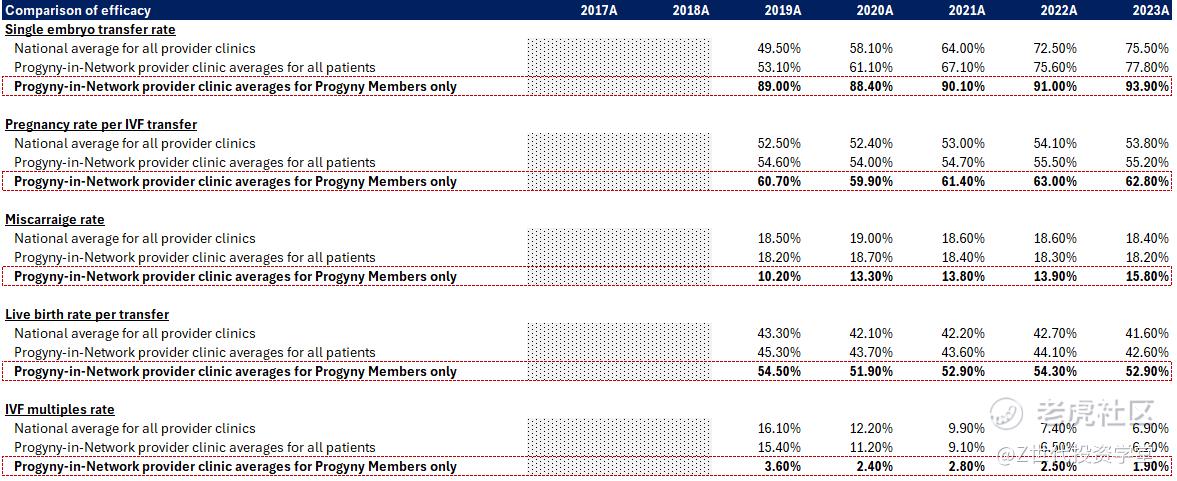
The results speak for themselves, with Progyny's in-Network provider clinics utilized by Progyny Members recording the higher efficacy rates from their treatments, which leads the national average for all provider clinics by a huge margin, as shown in the table below. (Source: CDC and Progyny)
*Do note that all of this is for information only and should not be taken as investment advice. If you should choose to invest in any of the stocks, you do so at your own risk.
*请注意,所有这些仅供参考,不应被视为投资建议。如果您选择投资任何股票,您需要自行承担风险。
精彩评论